
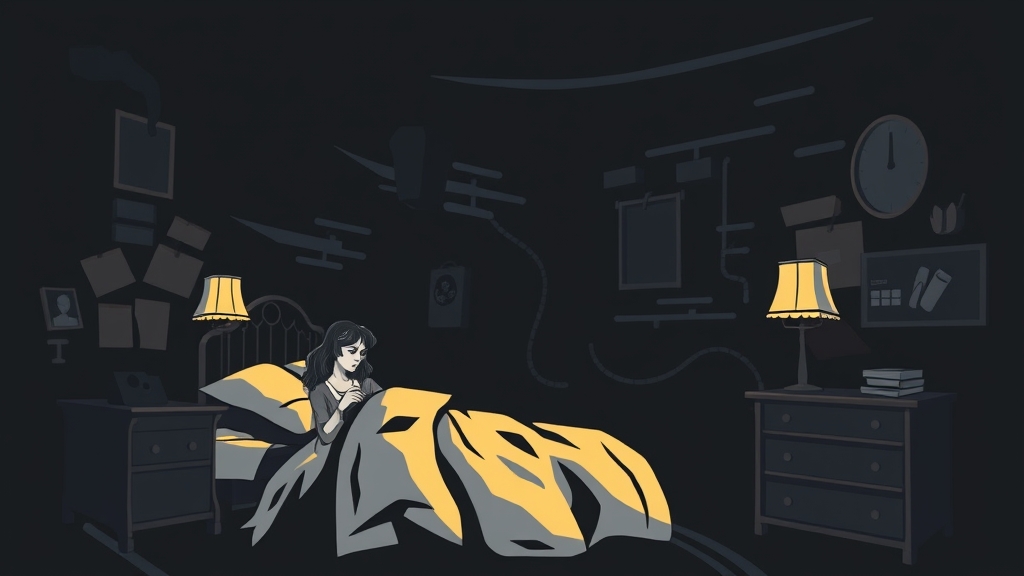
On a restless night in eighteen ninety-seven,
In Plymouth town where coal dust kissed the heaven,
A widow lay awake, eyes wide with dread,
Named Mary Titus, alone in her bed.
The clock crept past two, then closer to three,
When tapping rang out—sharp, wild, and free.
Not steady nor kind, not easy to trace,
It bounced through the halls, it shifted its place.
Sometimes below her, sometimes near,
Sometimes so loud, then faint in her ear.
She sat up straight, heart heavy with fear,
But silence fell sudden, stark and clear.
“Just branches,” she whispered, “or mice at play,”
And laid her head down to drift away.
Yet just as sleep began to creep,
The tapping returned—refusing sleep.
Her thoughts went dark to a man long gone,
Her husband lost where the mines collapsed on.
How she wished he stood by the door that night,
To chase the fear, to set things right.
But only her daughter, young Cora, was near,
Downstairs still weak, her health unclear.
With courage she borrowed and fear she denied,
Mary rose—then the tapping died.
Silence followed her step by step,
As though the sound itself had slept.
Her nerve gave way, she turned back fast,
Pulled up the sheets and hoped it passed.
At dawn the house was calm and plain,
Cora stitched softly, free of pain.
Relief swept in, the night seemed wrong,
Until the cellar tapped—clear and strong.
Mother and daughter locked their stare,
Both heard the sound, both felt the air.
“Mice,” said Cora, “below the floor.”
Mary ran down to prove it so.
No mice, no marks, no signs at all—
But tapping now came from the kitchen wall.
It chased her steps, it mocked her fear,
Above, below—always near.
A neighbor came with tools and pride,
“Just pipes,” he said, though his voice soon died.
The sound betrayed each place he checked,
Until his face turned pale, erect.
“That sound,” he said, with shaking breath,
“I heard it once… before their death.
Men trapped alive beneath the stone,
They tapped till hope and life were gone.”
He fled the house, his help withdrawn,
Leaving grief raw, freshly torn.
Was it the dead who begged to speak?
A ghostly call from souls too weak?
For days the sound refused to rest,
Reporters came, the town obsessed.
Each ear that listened heard the same—
A mystery calling Mary’s name.
Then on the sixth day, near despair,
The tapping came—intimate, bare.
So close it felt beneath their skin,
Mary leaned back—and truth walked in.
Beneath the table, plain and sure,
Cora’s foot moved—sharp, obscure.
A sickness rare, a dancing plague,
Made limbs betray what minds could not say.
She never knew her foot would pound,
Unwitting source of haunted sound.
Grief and fear had filled the space,
And reason never showed its face.
No ghosts, no mines, no souls in pain,
Just illness masked as something strange.
Yet even truth could not erase
The chilling days that marked that place.
Because the mind, when shaped by loss,
Will build its fears at any cost—
And sometimes ghosts are born not dead,
But from the stories grief has fed.