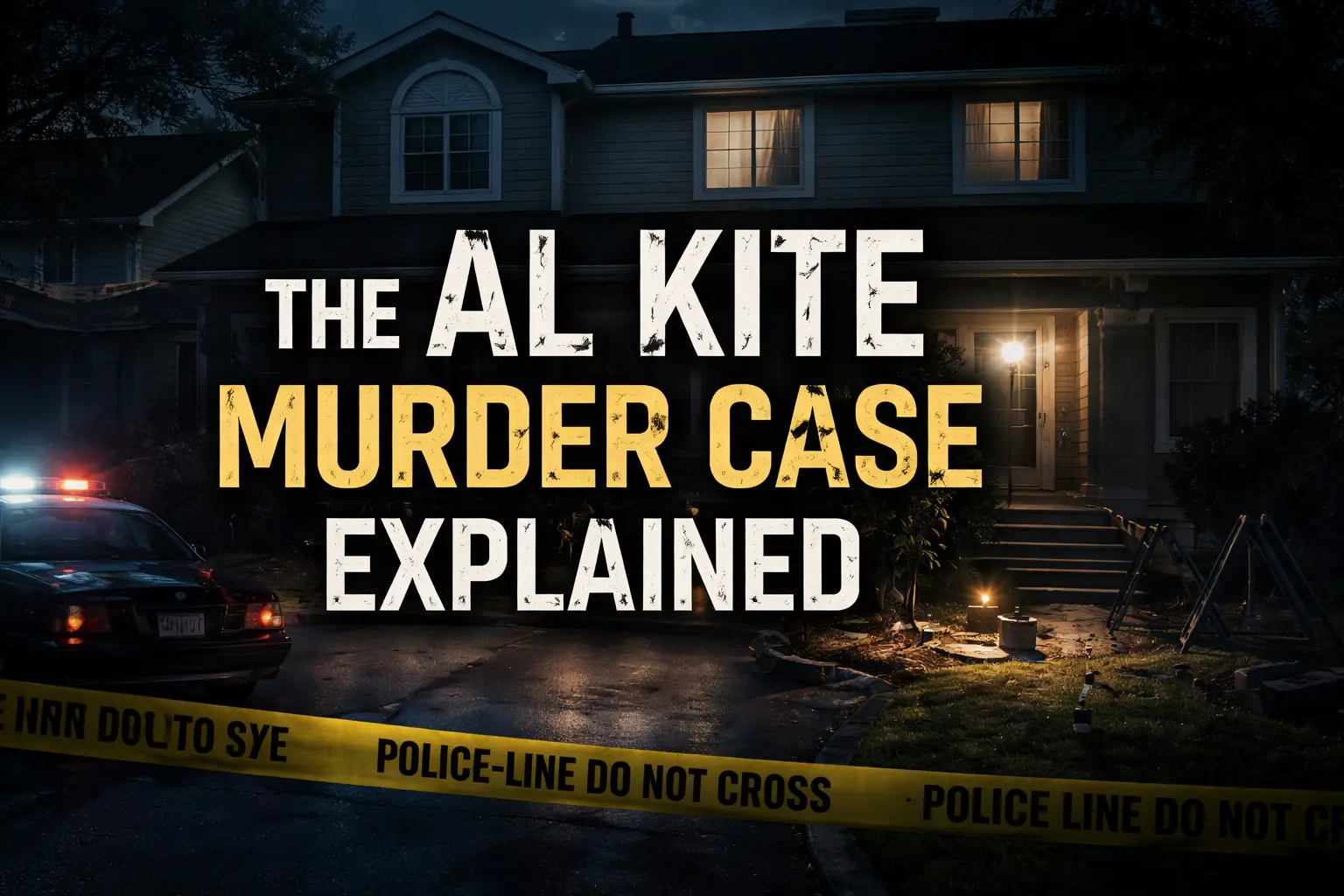
In May 2004, a quiet Aurora, Colorado neighborhood became the setting for a mystery that still refuses to loosen its grip. The Al Kite murder case explained isn’t just an unsolved homicide. It’s a story about trust placed in a stranger, an identity built on lies, and a man who seemed to disappear off the face of the earth.
A careful homeowner opened his door to a tenant. Weeks later, he was dead in his own basement.
More than twenty years have passed. The suspect remains unnamed. The questions have only grown louder.
This is one of Colorado’s most unsettling cold cases.
Victim Background
Alfred “Al” Kite Jr. was 53 years old in 2004, a financial manager known for being methodical and dependable. Friends described him as organized, polite, and steady — the kind of person who double-checked details and kept his life in order.
He lived alone in a tidy Aurora townhome and rented out a basement room for extra income. Kite didn’t take shortcuts with tenants. He asked for paperwork, references, and identification. He followed procedures because he believed they protected him.
That belief makes what happened feel especially cruel.
Shortly before his death, Kite agreed to rent his basement to a man calling himself Robert Cooper. The tenant arrived with documents and references that appeared legitimate. Nothing obvious suggested danger.
Only later would investigators discover that much of the man’s identity had been fabricated.
At the time, Al Kite believed he was renting to a stranger who had passed every test.
Chronological Timeline
The Tenant Moves In
In early May 2004, the man using the name Robert Cooper moved into the basement. He was described as quiet and polite. Neighbors did not report disturbances or suspicious activity.
There is no public evidence that Kite feared him.
May 22, 2004
On May 22, Kite was supposed to meet his girlfriend. He never showed up. Calls went unanswered. Those who knew him immediately sensed something was wrong — this was not normal behavior.
Concern turned into alarm. Authorities were contacted.
The Discovery
Police entered Kite’s townhome and found his body in the basement. Investigators determined there had been a struggle and that Kite had been restrained. The scene suggested the confrontation lasted longer than a sudden attack.
The tenant was gone.
So were the personal details that might have led directly to him. The identity he left behind unraveled almost immediately.
Investigation and Evidence
From the beginning, detectives focused on the tenant.
A False Identity
The name “Robert Cooper” was a dead end. The identification he provided was fraudulent. References listed on the rental application could not be verified. Phone numbers led nowhere.
Investigators concluded the suspect had built a deliberate false identity to gain access to the home.
This was not impulsive. It was planned.
DNA Evidence
Forensic evidence recovered at the scene produced a strong DNA profile. It was entered into national databases. No match appeared.
That remains one of the most frustrating aspects of the unsolved Al Kite case details: the evidence is solid, yet the suspect has never surfaced in the system. The absence of a match suggests he may not have a recorded criminal history tied to the database.
Authorities released a composite sketch based on witness descriptions. The man was believed to be white, likely in his 30s or 40s at the time, with a calm presence that did not attract attention.
Despite publicity, no confirmed identification followed.
Signs of Preparation
Detectives have publicly stated that the crime scene showed planning. The suspect appeared to bring items with him and exercised control over the environment.
There were no clear signs of a burglary gone wrong. The focus seemed personal, directed at Kite himself.
Why he was targeted remains unknown.
Suspect Analysis
The tenant suspect stands out in Colorado cold case history because of how completely he vanished.
He passed a rental screening under a false identity, committed the crime, and disappeared. Investigators have found no verified record of him before or after the murder using that name.
Some analysts have suggested the suspect may have experience assuming false identities or committing crimes in a way that avoids detection. Behavioral assessments have pointed to patience and emotional detachment.
But without knowing who he is, those remain theories — not conclusions.
There is no public evidence of a personal relationship between Kite and the suspect prior to the rental agreement. No confirmed motive has ever been established.
The lack of motive is one of the case’s most disturbing elements.
Trial or Current Status
There has been no arrest in the Aurora Colorado cold case 2004.
The investigation remains open. Aurora Police continue to emphasize that the DNA evidence is preserved and could still lead to identification. Advances in forensic science have solved other long-standing cases, giving investigators cautious hope.
Authorities have acknowledged that newer techniques, including genetic genealogy, may one day help. As of now, no public breakthrough has been announced.
Kite’s loved ones are still waiting for answers.
Unanswered Questions
The Al Kite case is heavy with unknowns.
Why was Kite chosen?
Was the rental arrangement the goal from the beginning?
Did the suspect commit crimes elsewhere under different identities?
How has he remained hidden for so long?
The al kite tenant suspect sketch remains one of the few tangible clues available to the public. Yet even with national attention, no confirmed recognition has emerged.
The DNA evidence is both proof and torment. It confirms the suspect’s presence. It confirms the crime. But it has not yet revealed a name.
For investigators, that gap is the case’s deepest frustration.
Social or Legal Impact
The murder forced difficult conversations about rental safety and identity verification. Landlords became more cautious. Background checks and documentation received renewed attention long before modern rental platforms made such concerns mainstream.
Within law enforcement circles, the case became an example of how identity fraud can intersect with violent crime. It exposed how easily paperwork can be manipulated and how trust can be exploited.
The colorado unsolved landlord murder also highlights the emotional reality of cold cases. Families live with unfinished grief. Communities carry the knowledge that justice remains incomplete.
Time does not soften that weight. It stretches it.
Reflective Conclusion
The al kite murder case explained is a reminder of how fragile ordinary safety can be. A routine decision — renting a room — opened the door to a crime that still echoes decades later.
People look for reasons in tragedies. They want patterns, warnings, explanations. This case offers none with certainty.
What remains is a portrait of a careful man remembered with respect, a family still seeking closure, and a DNA profile waiting to be matched with a face and a name.
Cold cases do not disappear. They linger quietly, demanding patience.
And somewhere, the man who called himself Robert Cooper carries the truth of what happened in that Aurora basement — even as the rest of the world continues searching for it.
FAQ
-
What is the Al Kite murder case explained in simple terms?
The al kite murder case explained refers to the unsolved 2004 killing of Alfred “Al” Kite Jr. in Aurora, Colorado. Kite rented a basement room to a man using a false identity. Shortly after moving in, the tenant disappeared and Kite was found dead in his home. Investigators recovered DNA evidence, but the suspect has never been identified or arrested.
-
Who was the main suspect in the Al Kite case?
The main suspect in the al kite murder case explained is a man who used the alias “Robert Cooper” to rent Kite’s basement. Investigators later confirmed the identity was fabricated. A composite sketch was released, and DNA evidence was collected, but no verified name has ever been connected to the suspect. He remains unidentified.
-
What evidence do police have in the Al Kite investigation?
Authorities recovered strong forensic evidence, including a DNA profile, during the al kite murder case explained investigation. The DNA was entered into national databases but did not match any known offender. Investigators also gathered rental paperwork and witness descriptions that helped create a composite sketch of the suspect.
-
Has anyone been arrested in the Al Kite murder?
No arrest has been made in the al kite murder case explained. The case remains open with Aurora Police. Despite DNA evidence and public appeals for information, the suspect has never been identified. Advances in forensic technology continue to give investigators hope that the case could still be solved.
-
Why is the Al Kite case considered unusual?
The al kite murder case explained is unusual because the suspect created a convincing false identity, passed a rental screening, and vanished after the crime. There is no confirmed record of him before or after the murder under that alias. The combination of planning, identity fraud, and lack of motive makes the case especially difficult.
-
Is the Al Kite case still being investigated today?
Yes. The al kite murder case explained remains an active cold case. Law enforcement has stated that evidence, including DNA, is preserved. Investigators continue to encourage tips and hope that modern forensic methods, such as genetic genealogy, could eventually identify the suspect.