
1. INTRODUCTION
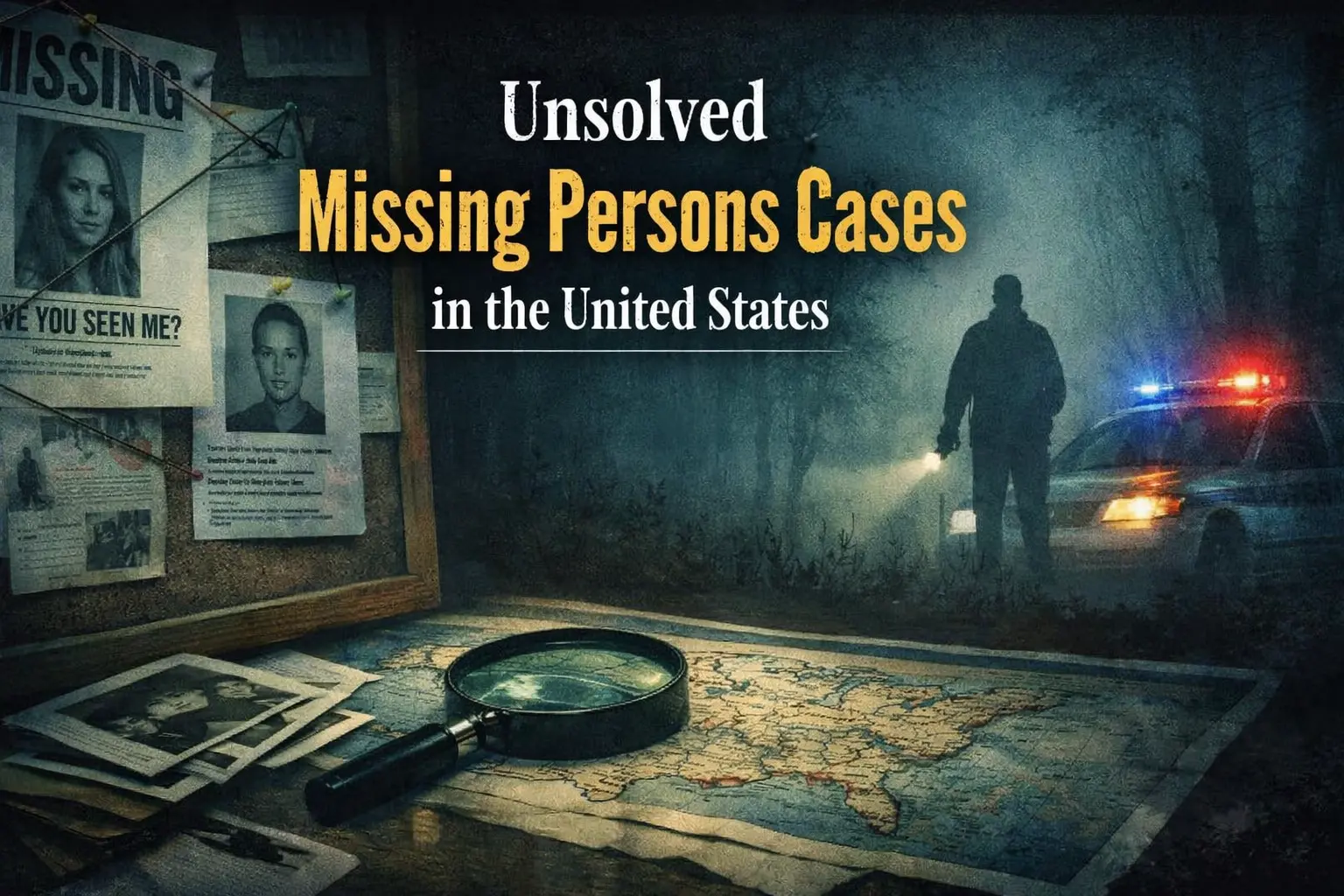
Every year in the United States, thousands of people vanish. Most are eventually found—sometimes within hours, sometimes after days or weeks. But a smaller, far more troubling group never returns. Their cases remain open, unresolved, and quietly haunting the system meant to find them.
These are unsolved missing persons cases. Situations where no clear explanation has ever been proven. No confirmed crime. No verified death. Often, not even a single moment that definitively explains what went wrong.
Unlike homicide investigations, disappearances rarely begin with a clear crime scene. Unlike accidents, there may be no physical trace at all. What’s left behind is uncertainty—fragmented timelines, conflicting accounts, and families forced to live indefinitely without answers.
These cases matter for reasons that go far beyond curiosity. They expose the limits of investigations, the consequences of early assumptions, and the emotional toll carried by families and communities long after public attention fades.
This article looks at unsolved missing persons cases in the United States through a broad investigative lens. Rather than focusing on individual names, it examines how and why these cases happen, what patterns repeat, and why so many remain unresolved—even decades later. It is designed to serve as a foundation for deeper reporting across msurk.com.
2. BACKGROUND & CONTEXT
What “Missing” Actually Means
In law enforcement terms, a missing person is anyone whose location is unknown and whose absence raises concern for their safety. Contrary to popular belief, there is no mandatory waiting period before a report can be filed. Adults and children, however, are treated very differently once a report is made.
A disappearance is generally considered unsolved when:
- The person has not been located
- No confirmed death has been established
- No suspect has been charged
- The circumstances remain unclear or disputed
In many cases, investigations remain open indefinitely—not because there are no theories, but because none can be proven.
A Brief Historical View
People have gone missing for as long as societies have existed, but systematic tracking is relatively recent. Before the late 20th century, missing persons cases were handled almost entirely at the local level. Records were inconsistent. Communication between jurisdictions was limited. Many cases were documented only in newspapers or family recollections.
National databases like the NCIC (National Crime Information Center) dramatically improved coordination, but they arrived too late for thousands of older cases. As a result, many long-term disappearances suffer from incomplete records that make modern reinvestigation extremely difficult.
Why People Disappear
There is no single explanation. Disappearances can involve:
- Voluntary departures
- Mental health crises
- Domestic violence
- Crimes committed by strangers or acquaintances
- Accidents in remote or dangerous environments
What separates an unsolved disappearance from a resolved one is not speculation—but the absence of verifiable evidence.
3. MAJOR CATEGORIES WITHIN THIS TOPIC
While every case is unique, unsolved disappearances tend to fall into several broad categories. These groupings help investigators assess risk, but they also reveal where investigations most often struggle.
Missing Adults
Adults are legally allowed to disappear. If there are no immediate signs of danger, law enforcement authority can be limited. In some cases, this results in delayed or minimal early investigation—sometimes during the most critical window of time.
Missing Children
Child disappearances typically trigger faster responses and broader alerts. Even so, many remain unresolved due to unreliable sightings, rapid evidence loss, or the simple difficulty of reconstructing events involving young witnesses.
Suspicious Disappearances
These cases involve red flags—abandoned vehicles, personal items left behind, contradictory statements—but still fall short of confirming a crime. They often linger in a gray area for years.
Long-Term Cold Cases
As time passes, cases grow colder. Evidence deteriorates. Witnesses move away or die. Paper records disappear. Each passing year makes resolution less likely, even when interest remains.
4. COMMON PATTERNS & ANALYSIS
When examined collectively, unsolved missing persons cases reveal striking similarities.
Missing Time
Nearly every unresolved disappearance includes gaps—periods where movements can’t be confirmed. Sometimes those gaps are hours. Sometimes minutes. Often, they’re never filled.
Witness Challenges
Witnesses are rarely malicious, but they are human. Memories fade. Stories shift. Media coverage influences recollection. Over time, even honest accounts become unreliable.
Environmental Obstacles
Remote terrain, dense forests, bodies of water, and extreme weather can erase evidence almost immediately. In these environments, even large-scale searches may find nothing.
Early Assumptions
Some cases stall because of initial conclusions—voluntary disappearance, accident, mental health episode—that later prove questionable. Once an investigation heads down a particular path, reversing course can be difficult.
5. TIMELINE / EVOLUTION
Before Digital Tracking
In earlier decades, investigators relied on physical searches, local tips, and paper files. Surveillance was rare. Communication between agencies was slow. Many cases from this era remain unresolved simply because too little was recorded at the time.
The Role of Technology
Modern investigations benefit from:
- Cell phone records
- Surveillance cameras
- Digital transaction histories
Yet technology has not eliminated disappearances. In some cases, partial data only deepens the mystery, raising new questions without providing answers.
Media Attention
True crime media has brought renewed focus to missing persons cases. Public awareness can generate tips and revive stalled investigations. At the same time, it can amplify speculation, spread inaccuracies, and create narratives unsupported by evidence.
6. IMPACT ON SOCIETY & LAW
Families Left Behind
Families of missing persons live in a state of prolonged uncertainty. There is no closure, no clear grieving process. Legal complications—estate management, custody, insurance—often add to the emotional burden.
Legal and Policy Shifts
Unsolved disappearance cases have influenced major changes, including:
- Amber Alert systems
- Dedicated missing persons units
- Improved inter-agency coordination
Even so, adult cases still receive uneven attention, particularly when no immediate danger is apparent.
Cultural Impact
These cases shape public understanding of safety, risk, and the limitations of law enforcement. They challenge the assumption that every mystery has a resolution.
7. WHY THESE CASES REMAIN UNSOLVED
No Physical Proof
Without a body, crime scene, or confirmed event, proving a crime occurred is extraordinarily difficult.
Jurisdiction Issues
When cases cross city, county, or state lines, responsibility can become fragmented. Delays and miscommunication are common.
Limited Resources
Cold cases compete with active investigations. As time passes, staffing and funding often decrease.
The Weight of Time
Years change everything. Evidence degrades. Witnesses disappear. Leads lose context. Eventually, even promising avenues become impossible to verify.
8. EXPERT & INVESTIGATIVE INSIGHTS
Criminologists consistently describe disappearances as some of the most challenging cases to solve. They exist at the intersection of criminal investigation, civil rights, and human behavior.
Investigators emphasize several recurring truths:
- The first hours matter most
- Assumptions can derail progress
- Community involvement must be handled carefully
Experts also warn against oversimplification. Not every disappearance is a crime. Not every unsolved case represents investigative failure. The reality is often far more complex.
9. Explore Related Missing Person Cases & Investigations
This article functions as the central hub for disappearance reporting on www.msurk.com.
- Alonzo Brooks Case Explained: What Really Happened After the Kansas Party?
 Alonzo Brooks case explained: a deeper look at the Kansas party, investigation failures, and the unanswered questions behind this unsolved homicide.
 - What Happened to Mekayla Bali? Inside Canada’s Most Disturbing Unanswered Disappearance
 What happened to Mekayla Bali? A deeply reported look into the 2016 disappearance of a Canadian teen last seen in Yorkton, Saskatchewan.
 - Appalachian Trail Murders 1981 Explained: The Unsolved Case of Mitchell Weiser and Bonnie Bickwit
 Appalachian Trail murders 1981 explained—how Mitchell Weiser and Bonnie Bickwit were killed, why justice took years, and what investigators missed.
 - Sneha Philip Disappearance Explained: The Unanswered Questions Behind a 9/11-Era Mystery
 Sneha Philip disappearance explained through a detailed timeline, investigation failures, and unanswered questions surrounding a 9/11-era missing persons case.
 - Brandon Lawson 911 Call Explained — A Psychological Breakdown of an Unsolved Disappearance
 Brandon Lawson 911 call explained through psychology, investigation failures, and unanswered questions behind one of Texas’s most haunting disappearances.
 - Cindy Song Disappearance Explained: The Penn State Mystery Still Unsolved
 Cindy Song disappearance explained — a deep investigation into the Penn State student who vanished after Halloween night in 2001.
 - Ray Gricar Disappearance Explained: The Prosecutor Who Vanished Without a Trace
 Ray Gricar disappearance explained — a deep dive into the vanished Pennsylvania prosecutor, evidence, timeline, and unanswered questions.
 - Al Kite Murder Case Explained: DNA Clues and the Tenant Who Vanished
 The Al Kite murder case explained — a chilling 2004 Colorado cold case involving a vanished tenant, DNA clues, and unanswered questions.
 - Bryce Laspisa Disappearance Explained: The Strange Timeline Before He Vanished
 A deep dive into the Bryce Laspisa disappearance explained — timeline, investigation gaps, and the haunting unanswered questions.
 - Zebb Quinn Disappearance Explained: The Asheville Mystery That Still Haunts Investigators
 Zebb Quinn disappearance explained — a haunting North Carolina cold case filled with strange clues, investigative twists, and unanswered questions.
 - Asha Degree Disappearance Explained: The Night a Child Vanished
 Asha Degree disappearance explained in a fact-based deep dive into the timeline, evidence, and unanswered questions behind a haunting child missing case.
 - Brian Shaffer Surveillance Mystery Explained — The Footage That Still Confuses Investigators
 The brian shaffer surveillance mystery explained — a vanished medical student, missing footage, and the unanswered questions that still haunt Columbus.
 - Lauren Spierer Case Explained — How Witness Silence Shaped an Unsolved Mystery
 Lauren Spierer case explained through the lens of witness silence, investigative gaps, and the haunting questions that still surround her disappearance.
 - West Mesa Bone Collector Case Explained: How 11 Murders Went Unsolved
 A deep dive into the west mesa bone collector case explained — investigation failures, victims, and the unanswered questions haunting Albuquerque.
 - Tammy Zywicki Murder Explained – What Really Happened on Interstate 80?
 Tammy Zywicki murder explained: A deep look at the missed leads, highway sightings, and unanswered questions in this haunting 1984 cold case.
 - Judy Smith Death Explained: The Bizarre Timeline From Philadelphia to North Carolina
 Judy Smith death explained: A baffling 1997 timeline mystery stretching from Philadelphia to North Carolina that remains unsolved.
 - Andrew Gosden Disappearance Explained — What the Missing Digital Evidence Reveals
 Andrew Gosden disappearance explained through timeline, CCTV gaps, digital trail mystery, and the unanswered questions that still haunt investigators.
 - Elisa Lam Case Explained: Mental Health Crisis or Criminal Mystery?
 Elisa Lam case explained through verified facts—mental health, investigation details, and the unanswered questions behind the Cecil Hotel tragedy.
 - Kyron Horman Disappearance Explained: Inside the Investigation Conflict That Divided Authorities
 Kyron Horman disappearance explained — a detailed look at the timeline, investigation conflict, and unanswered questions in the 2010 Oregon case.
 - Jennifer Kesse Disappearance Explained: The Surveillance Footage That Frustrated Investigators
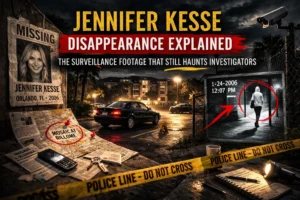 Jennifer Kesse disappearance explained: Inside the surveillance mystery, investigative setbacks, and unanswered questions in Orlando’s 2006 cold case.
 - Misty Copsey Disappearance Explained: The 1992 Spanaway Cold Case That Still Haunts Washington
 A detailed look at the misty copsey disappearance explained — timeline, suspects, investigation failures, and why the 1992 case remains unsolved.
 - Bradley Nowell Death Explained: The Disputed Circumstances Behind Sublime’s Tragic 1996 Loss
 Bradley Nowell death explained — a closer look at the 1996 overdose in San Francisco and the questions that still surround it.
 - Lindsay Buziak Murder Explained: Inside the Planned Real Estate Killing That Still Haunts Canada
 Lindsay Buziak murder explained: Inside the chilling 2008 real estate killing in Saanich, British Columbia that remains unsolved.
 - Kessey Morrison Case Explained: What Happened in the 2006 Medicine Hat Killings?
 Kessey Morrison case explained — a closer look at the 2006 Medicine Hat family murders, the investigation, the psychology, and the lasting legal impact.
 - Mitchell Byers Missing Explained: The Signal Peak Cave Investigation Breakdown
 Mitchell Byers missing explained: Inside the 2015 Gunnison, Colorado disappearance and the search effort that left haunting unanswered questions.
 - Philip Fraser Disappearance Explained: The 1988 Anchorage Mystery That Remains Unsolved
 Philip Fraser disappearance explained: Inside the 1988 Anchorage case that became one of Alaska’s most haunting unsolved mysteries.
(Individual case articles link back here using natural anchors such as “unsolved missing persons cases in the U.S.”)
10. FAQs
-
What makes a missing persons case “unsolved”?
When no confirmed explanation has been proven and the individual has not been located.
-
Are most missing persons cases resolved?
Yes. The majority are, but a meaningful number remain open long-term.
-
Why are adult cases harder to investigate?
Adults can legally leave, limiting law enforcement authority without evidence of danger.
-
Can cold cases still be solved?
Sometimes—but the odds decrease significantly over time.
-
How important is early evidence?
It is often decisive. Delays can permanently affect outcomes.
-
Does media attention help?
It can, but it also risks spreading misinformation.
-
Are these cases actively investigated?
Some are, though many receive limited ongoing resources.
-
Can technology reopen old cases?
In certain situations, yes—especially with DNA or digital data.
-
Why don’t police close cases without answers?
Because uncertainty remains. Many stay open indefinitely.
-
Are serial crimes common in disappearances?
They are rare but documented.
-
What role do families play?
Families often sustain public awareness and push for continued review.
-
Can someone be legally declared dead?
Yes, though this does not end criminal investigation.
-
Are national databases shared?
Yes, though older cases often lack complete data.
-
Why are wilderness disappearances so difficult?
Environmental conditions can destroy evidence quickly.
11. CONCLUSION
Unsolved missing persons cases are defined not by spectacle, but by absence—of evidence, of certainty, of resolution. They challenge investigators, strain families, and remind society that not every mystery yields answers.
Understanding why these cases remain unresolved requires patience, restraint, and a commitment to facts over speculation. As technology improves and awareness grows, some cases may still be solved. Others may remain unanswered forever.
This pillar exists to provide context and credibility—to serve as a foundation for deeper investigation, and to ensure these disappearances are approached with seriousness, care, and respect.